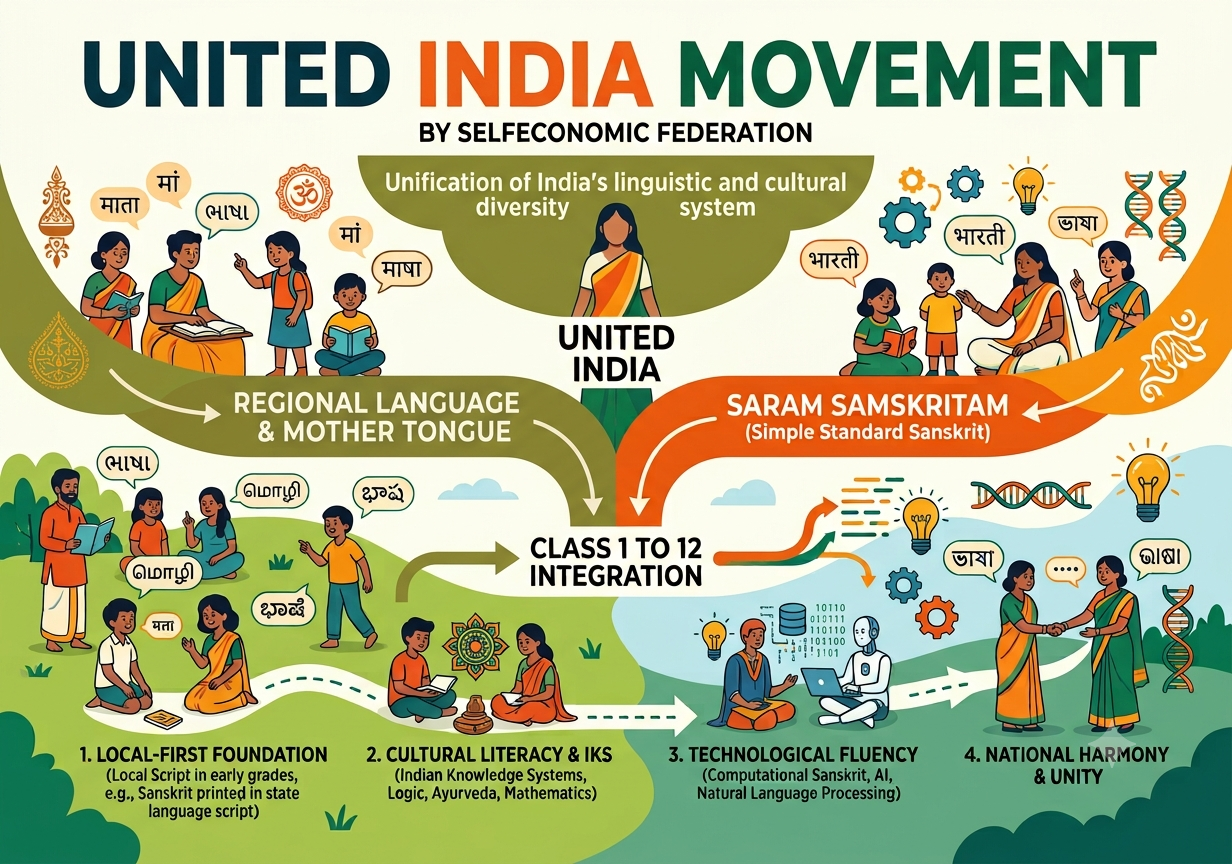
How aligning linguistic revival directly fights administrative corruption.
Replacing complex legacy colonial templates with structured, algorithmically optimized Sanskrit vocabulary. This builds an unbiased, uniform operating system for federal communication across every state.
Linguistic opacity breeds middlemen and corporate lobbying. Bureaucratic jargon will be restructured via immutable linguistic parameters, creating structural clarity that eliminates room for bribes.
Draft outlining standard integration protocols for the 14 constitutional languages.
A complete systematic proposal linking language simplicity factors to citizen documentation accessibility.
Petition ensuring that administrative portals must feature regional translations dynamically based on early 14-language frameworks.
The roots of Sanskrit advocacy within modern Indian political thought.
Distinguished leaders including Dr. B.R. Ambedkar and Naziruddin Ahmed supported or backed structural provisions evaluating Sanskrit as the sovereign official language of the Union due to its inherent cross-regional, classical neutrality.
The Eighth Schedule initially prioritized 14 primary foundational languages to anchor democratic equity, recognizing Sanskrit right from its historic genesis.
Provides mechanisms for the progressive official usage of scheduled languages within Parliamentary operations.
Explicitly mandates the Union to promote the spread of Hindi while drawing its structural vocabulary primarily from Sanskrit, making it foundational to state architecture.
Ensures that Sanskrit maintains absolute, peer-level legal backing alongside all other major languages of India.
A systematic phase-wise approach toward national adoption.
Developing standardized administrative translations alongside the core 14 regional languages to establish equal footing.
Introducing unified bilingual options within government documentation, tracking systems, and digital portals.
Enacting Parliamentary constitutional amendments to codify Sanskrit as a universal secondary national validation anchor.
Sanskrit acts as an impartial historical bridge. Because it is the historical repository of linguistic structural roots across most Indian language groups, it avoids regional friction or linguistic dominance disputes.
UIM values all scheduled regional languages equally. The proposed architecture updates structures in tandem with the primary 14 foundational languages to safeguard state heritage.